Busan, Seoul’s little brother at the southern coast, boasts with picturesque scenery and an unique history. Being the last city that was not captured by the North Koreans during the Korean War (1950-1953), Busan has a special place in history for not only South Korean, but to a certain extent also the whole world. The Korean War is not known as well the Vietnam War, but being the first post World War II proxy war, it changed the landscape of the Cold War, and more importantly, the fate of the Koreans forever. To this day, no peace treaty was signed – only an armistice agreement. Officially, North Korea and South Korea are still at war.
Today, Busan is home to nearly 4 million people and the hilly landscape give visitors a good idea of why it was so difficult conquer this city. So, let’s take a look at three places that are off the main tourist road.
Rooftop at Lotte Department Store
Busan is home to one of the world’s largest department store. But besides the shopping spree that many go on its 13 floors, the store offers a gigantic observation deck. The views are simply breathtaking – especially during sunset. Due to positioning and size of the observation deck, the whole city of Busan can be seen.
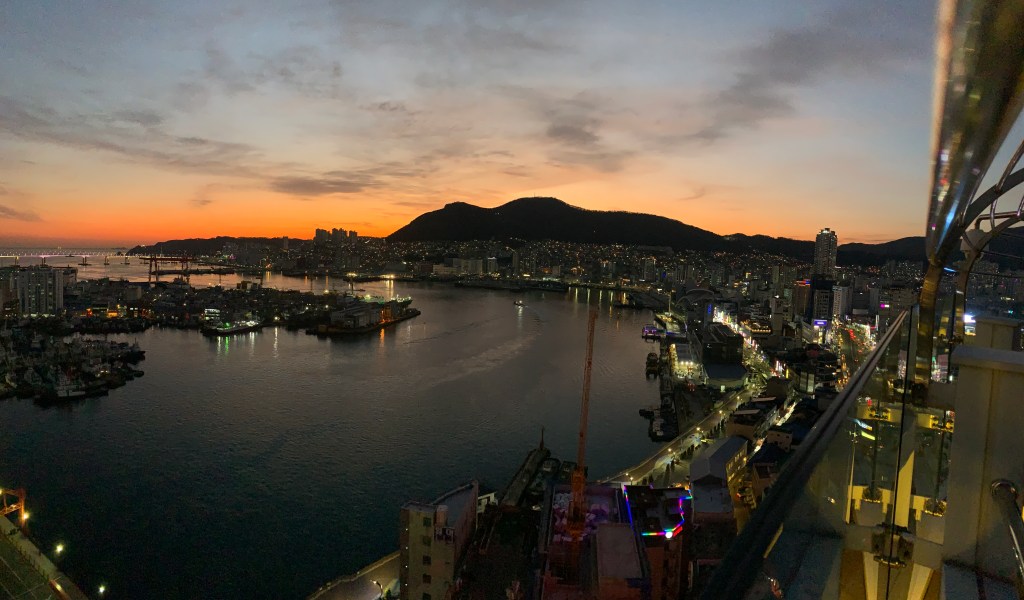
How to get there:
Take Subway line 1 (orange) to Nampo and take exit 8 or 10.
It is also a very short walk from Jagalchi. Tip: if you are heading for/from Jagalchi, walk Gwanbok-ro instead of taking the subway! Gwanbok-ro and its alleys are worth seeing, especially at night.
Gukje Market
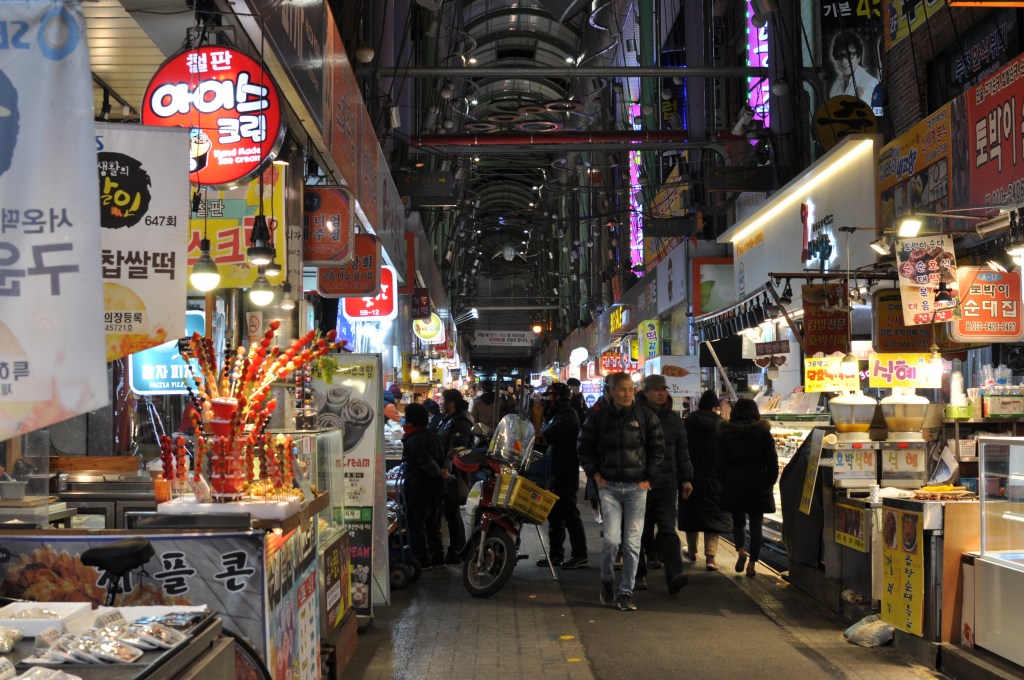
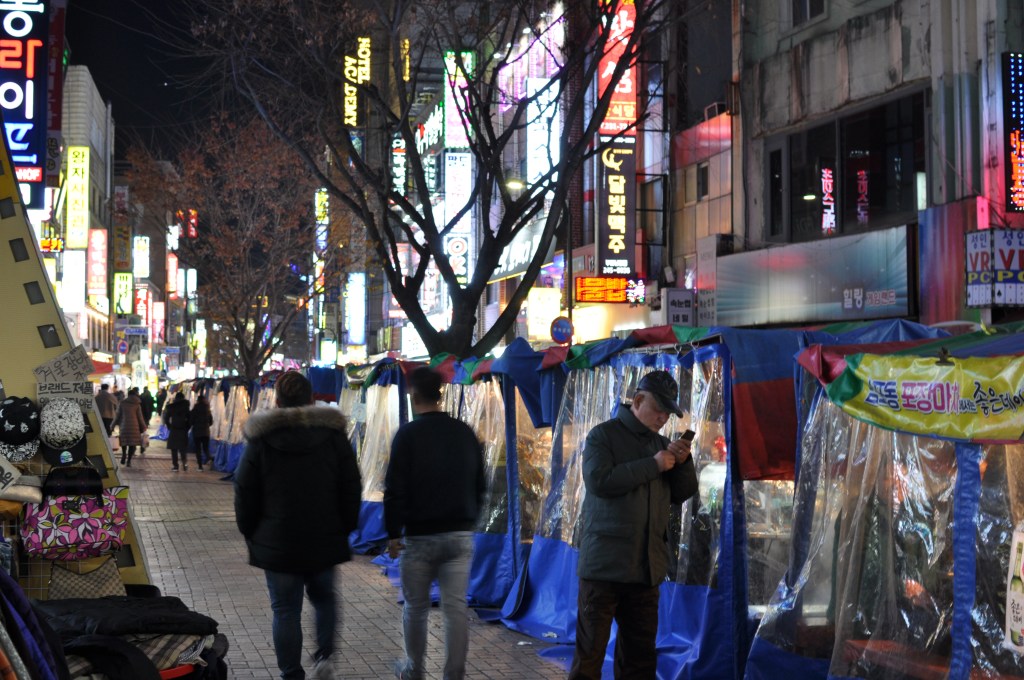
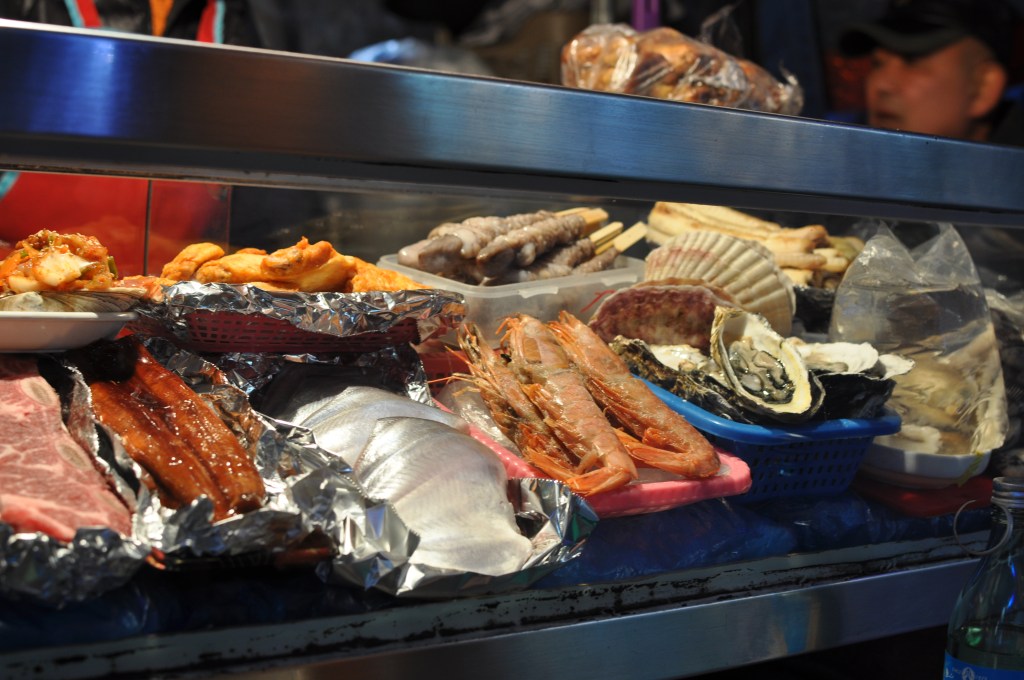
Albeit touristy, this market gets very buzzy at night. Locals and tourist alike immerse themselves in the colourful display of local and Korean specialities. Prices range from 1000 KRW for a hotteok (deep fried sweet Korean pancake with cinnamon filling), 3000 KRW for a portion of ttoppoki (rice cake in hot sauce) and up to 10 000 KRW for seafood. In the alleys in front of the market, you can find specialized tents with local food where you can have a seat. Typically, you sit in front of the host, point at what you want and the host prepares it for you. You can meet local people in those tents and usually they get quite cozy due to the limited space. Be aware that those tents do not feature English menus and do not acceppt credit cards, so if you are on a budget, communicate with a calculator to make sure you have enough cash with you.
How to get there:
Take Subway line 1 (orange) to Jagalchi and take exit 5, head straight North. If you are coming from the Lotte Department Store, walk alongside Gwanbok-ro and turn right (North) when you see the tents.
Igidae Park
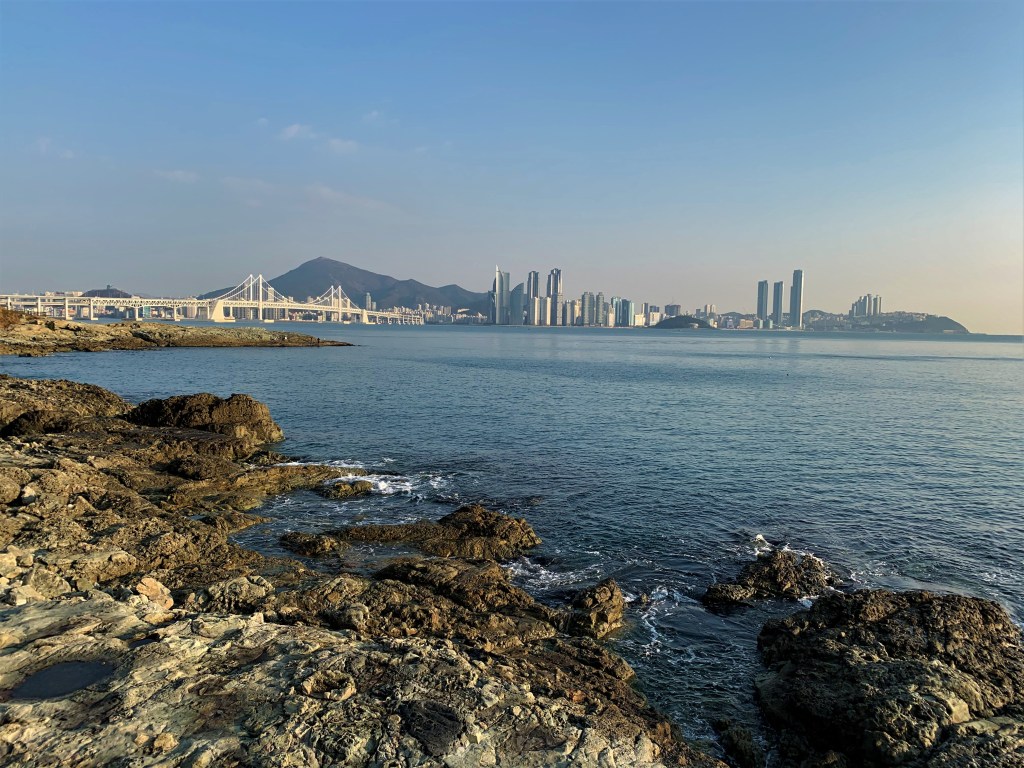
Situated east of Busan’s city core, Igidae offers a coastal walk that is less touristy than that of the well known Taejongdae park. Breathtaking cliffs alongside a panoramic view of the eastern city of Busan give this park something special- being in the midst of nature, listening to the breaking waves, smelling the fresh moss and trees, while at the same time looking at the skyline of Haeundae and the famous Gwangan Bridge.
The walk can be a bit slippery when wet, so a pair of stable shoes are highly recommended. You can either walk from north to south or the other way around.
How to get there:
Take Subway line 2 (green) to Namcheon and take exit 3. Walk south-east and cross Gwangan Bridge. Do not worry, you can walk underneath the bridge, there are pedestrian crossings. From there, in about 400 m the trail from the northern end of park begins.

