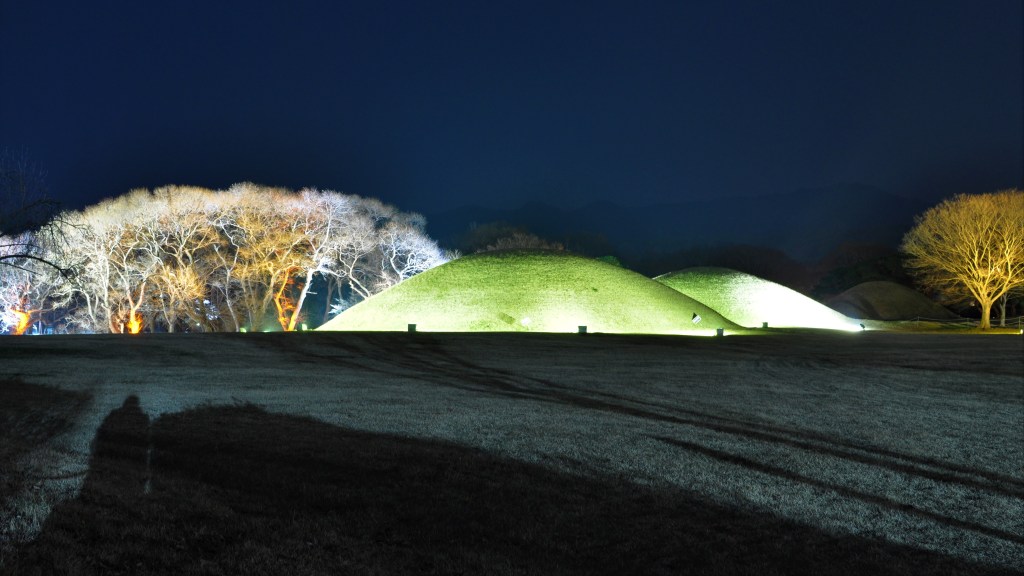
Gyeongju, situated in the south-east of South Korea, is home to about 270 000 inhabitants and is thus, for Asian cities, rather small. So why bother going there?
Gyeongju is the ancient capital of the Kingdom of Silla, which covered most of the area that is today known as North and South Korea. Silla lasted around 1000 years, from 57 BC to 935 AD. Thus, the city is also known as “museum without walls”, since everywhere in the city you can spot geometrical perfectly cycled hills, which serve as tombs for the Silla emperors. Today, those are UNESCO World Heritages. Also, Gyeongju is home to mountains and many temples worth visiting.Here are 3 places that we found interesting.
Donggung Palace and Wolji Pond
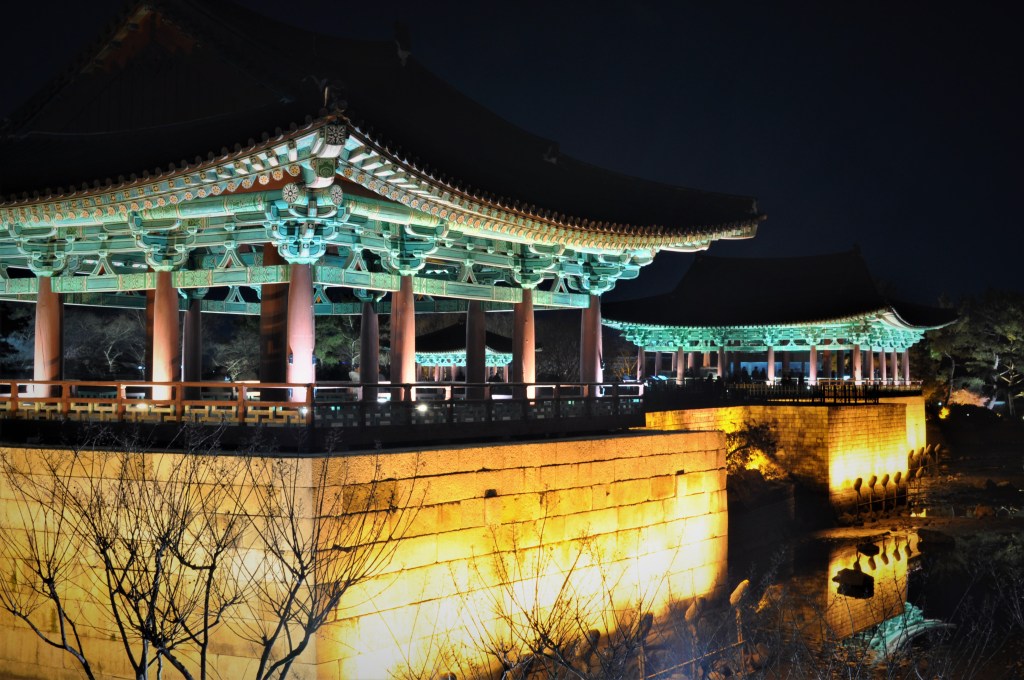
Situated just at the south eastern corner of Gyeongju city, this palace is easy to reach. The palace and the artificial pond were erected – you guessed it – for a Silla King in 7th century. Three “islands” with temples on them feature typcial architecture of these ancient days. It is recommended to visit the temple at night, since the reflections of light and buildings in the pond make a truly magnificient scenery. Even in December, when we visited the temple, it was open until 22:00.
How to get there:
Take Bus 10 or 11, those run from Gyeongju City to Bulguksa Temple and vice versa. You also can walk there if you are in the city.
Area around Sajeong-dong
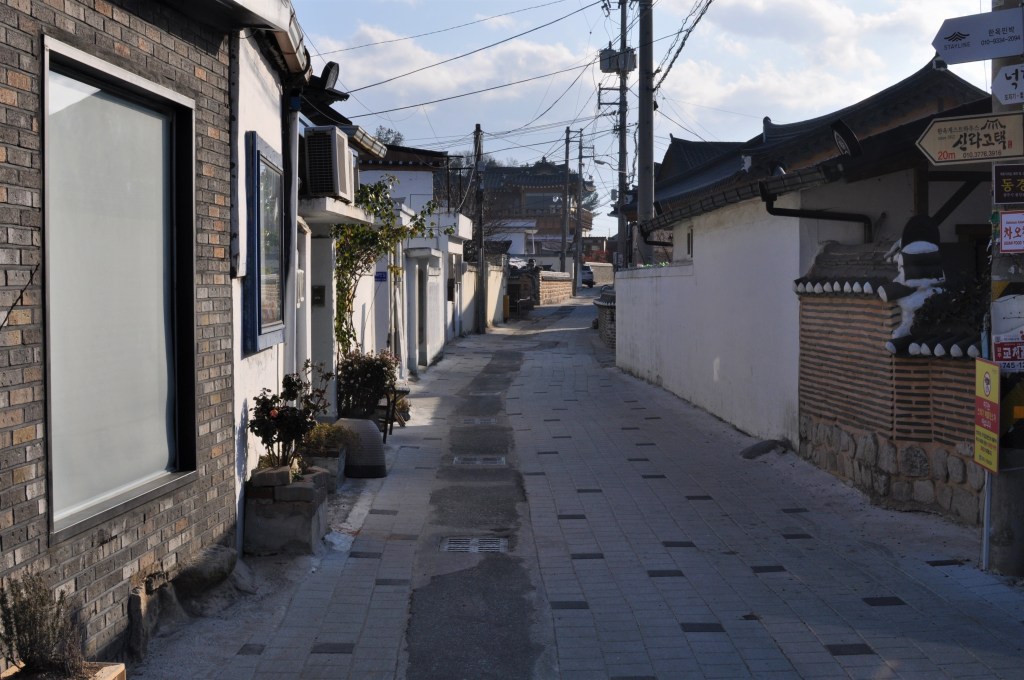
The are around Sajeong-dong is known for its traditional Korean-style architecture with local inhabitants. Some buildings were decaying, while otheres where given a new life. This contrast makes this corner of the city so fascinating, with touristy bars and restaurants in one alley, while the street just across features local people minding their own business.
How to get there:
From the Expressbus Terminal of Gyeongju, it is a simple 10 min walk south-east.

