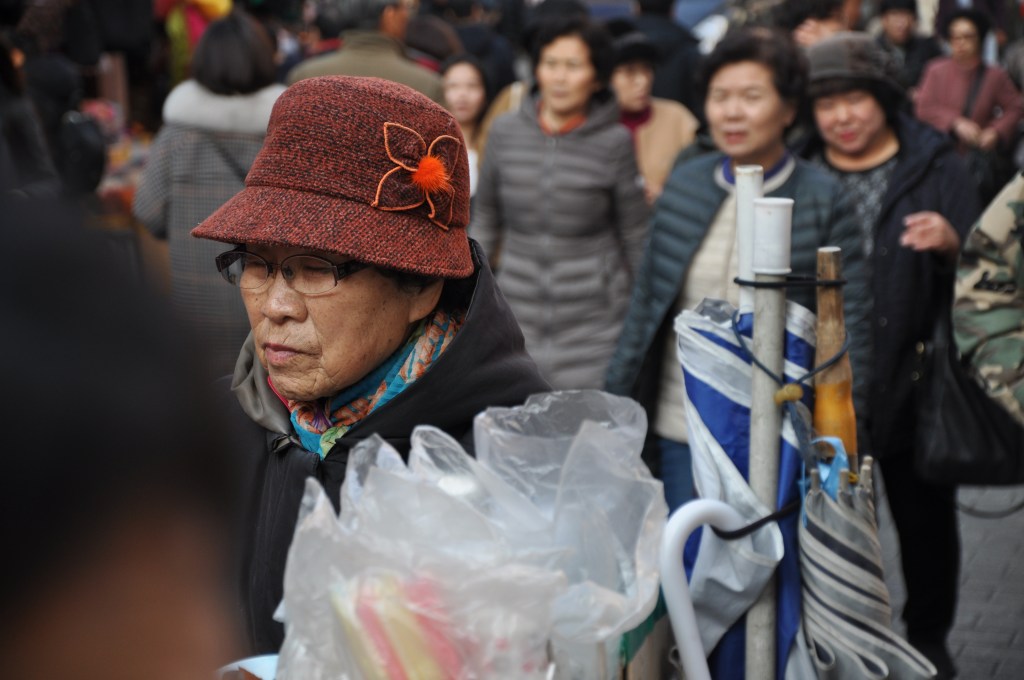
What Paris is to France, Seoul is to South Korea. The omnipresent capital, self-proclaimed “S(e)oul of Asia”, epicenter of K-Pop and only 50 km away from its northern neighbour that has missiles aimed at it. Seoul and its metropolitan area make up for nearly half of of South Korea’s population of 50 million people. The South Korean capital is a city of contrasts: buzzing, colourful, modern – and at the same time home to ancient palaces and more recently, pawn on the chess board of the Cold War.
The city reminds me of a mixture of Beijing and Tokyo – fittingly, it is located right in between those cities. Seoul’s vibe resembles the sometimes chaotic, but charming capital of China, while at the same time mirrors the politeness and efficiency of Tokyo. There is a lot more to see than just 3 places, but these captured Seoul best for me:
Namsan
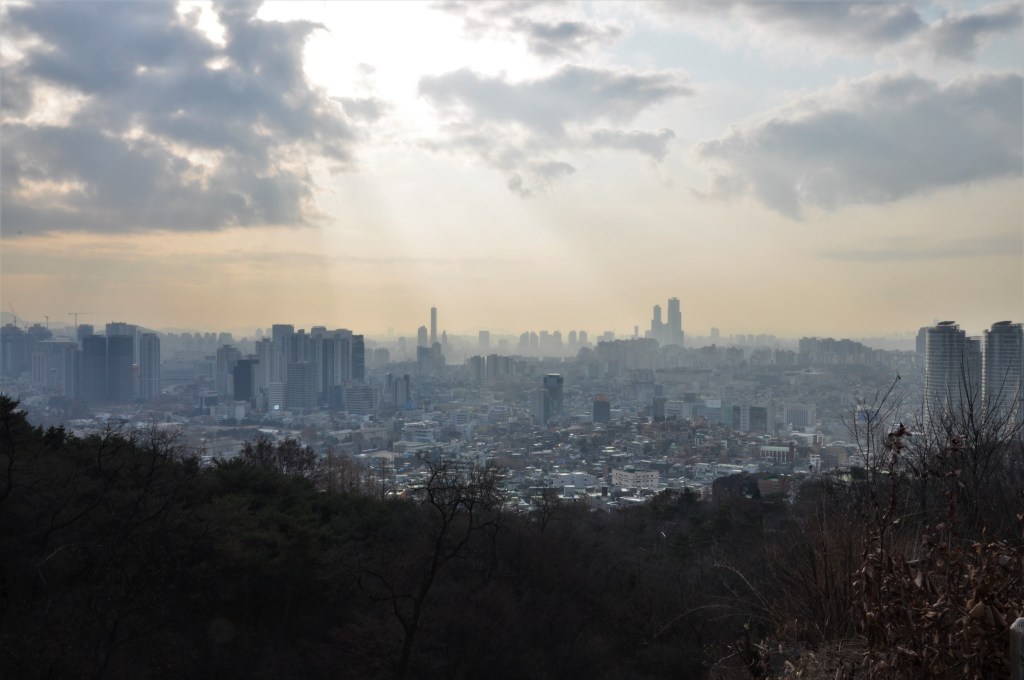
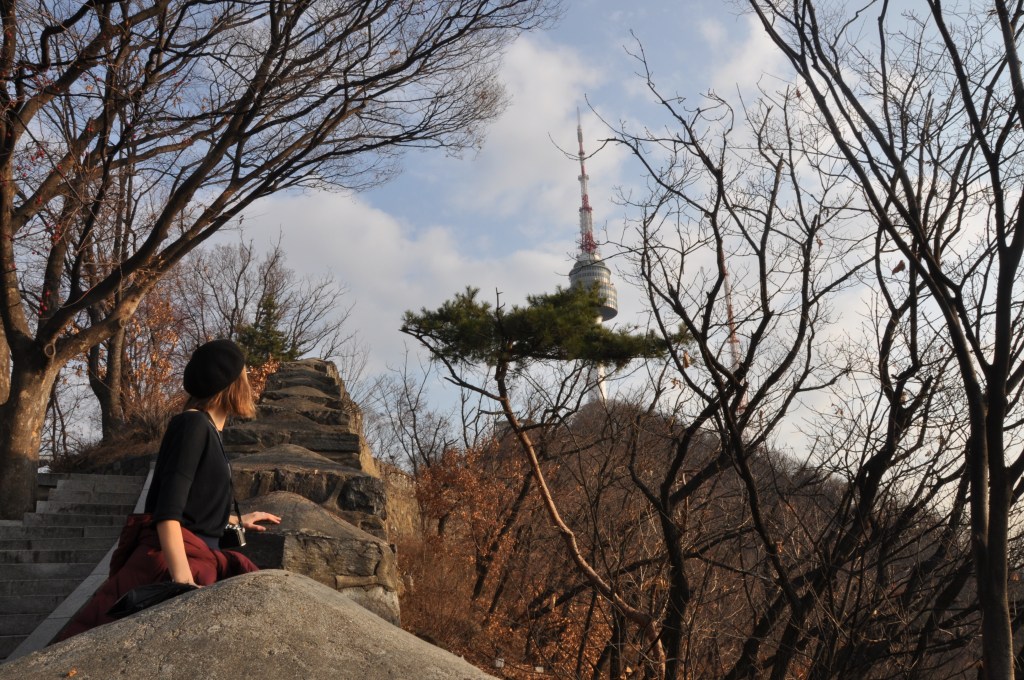
Right in the very center of Seoul, Namsan (“South Mountain”) with its Namsan Tower is visible from nearly every corner of the city. There are multiple routes to the top, the northern trails are recommended due to their intersection with parts of the ancient Seoul city wall – good contrast for photos, since you have the modern skyline and the Namsan Tower in the background. The trail is well maintained and easy to walk.
How to get there:
From Seoul Station and also subway station Hoehyeon, it is a short walk to the start of the northern trail. Simply follow the signage to the top. There are also buses going up, but you’d miss all the views!
Korean War Memorial and Museum
The Korean peninsula has always been of great strategic interest to its neighbouring countries. Multiple wars were fought, the most recent one is still officially not over: the Korean War that started 1950 and “ended” with the armistice agreement of 1953. This memorial and its adjacent museum are dedicated to all those who have lost their lives in that time, pay tribute to the countries of the UN-forces who supported the South, and last but not least, to all Koreans living today in two countries.
A very powerful and emotional exhibition that is a absolute must see for people that want to understand the Korean identity – and to a certain extent the world we now live in.
How to get there:
Take Subway lines 4 (light blue) or 6 (brown) to Samgakji and take exit number 12, walk a bit to the east and you should see the memorial, with the museum just in the back.
Retro Korean BBQ at Jongno 3-ga
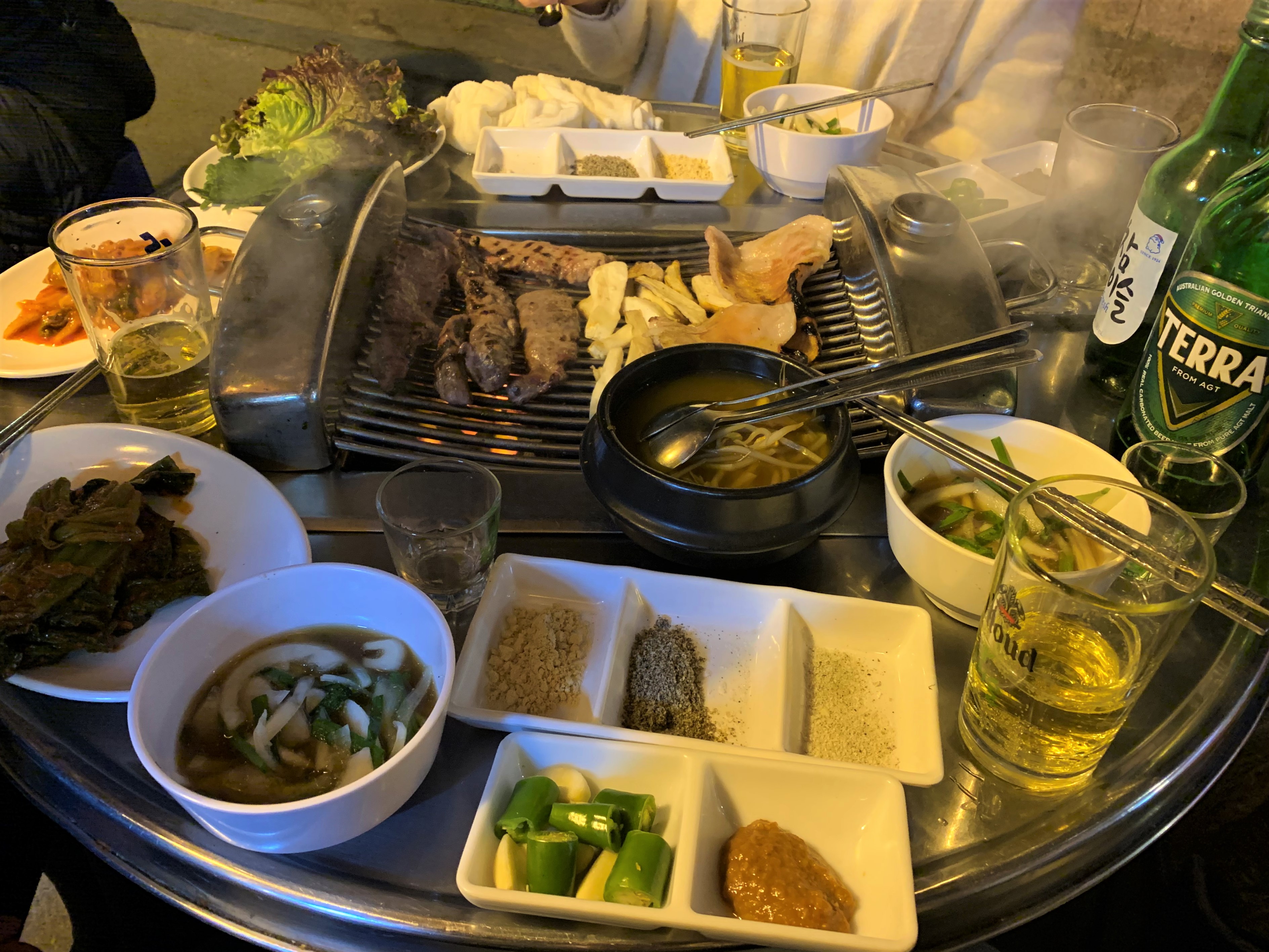
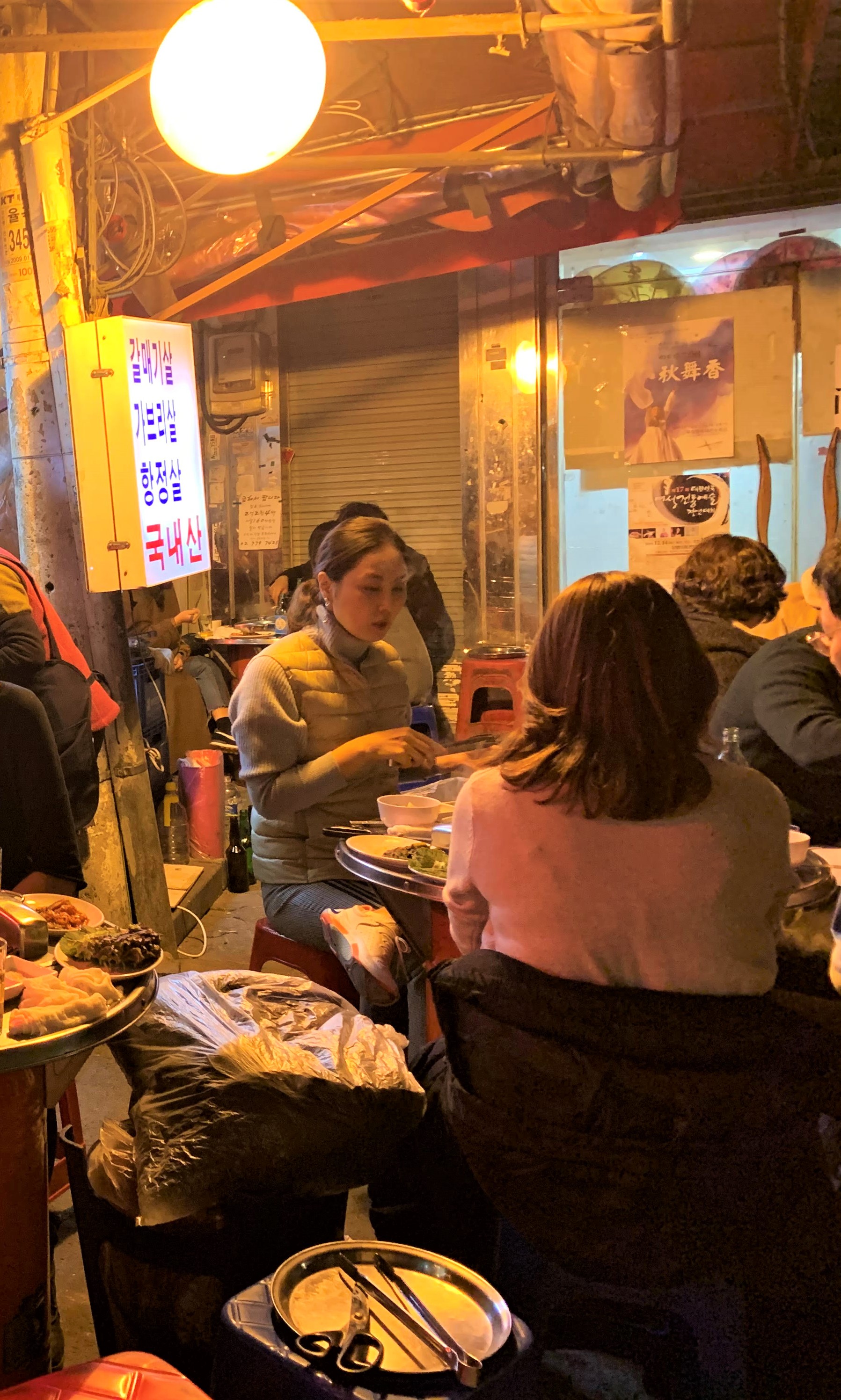
The small alleys close to Jongo 3-ga station feature many small authentic Korean BBQ stalls. A local friend guided us there and said that these “retro” places are becoming very popular amongst Korean hipsters. These stalls are quite simple and no-frills: it’s all about the BBQ. You sit on plastic stools around a small table with an integrated grill under dim light. From everywhere we have dined so far in Korea, this was amongst the authentic experiences.
Typically, you order some cuts of meat, spice it up a bit and eat it in a wrap of salad. Very popular are also Soju bombs- a bit of Soju mixed with beer (“somac” – so for soju, mac for beer). It sounds strange at first, but the taste is actually quite good and refreshing! Very popular right now is the so called mix “Tesla”, consisting of the Korean beer “Terra” and the soju brand “Chamisul”.
How to get there:
Subway lines 1 (dark blue), 3 (orange), 5 (purple) all stop at Jongno 3-ga, though taking line 1 and 3 gets you closest to exit 2-1, which is right where the magic happens. Simply walk a bit north through the alleys and choose one place that is most appealing to you.
 3 places